 Shopping cart



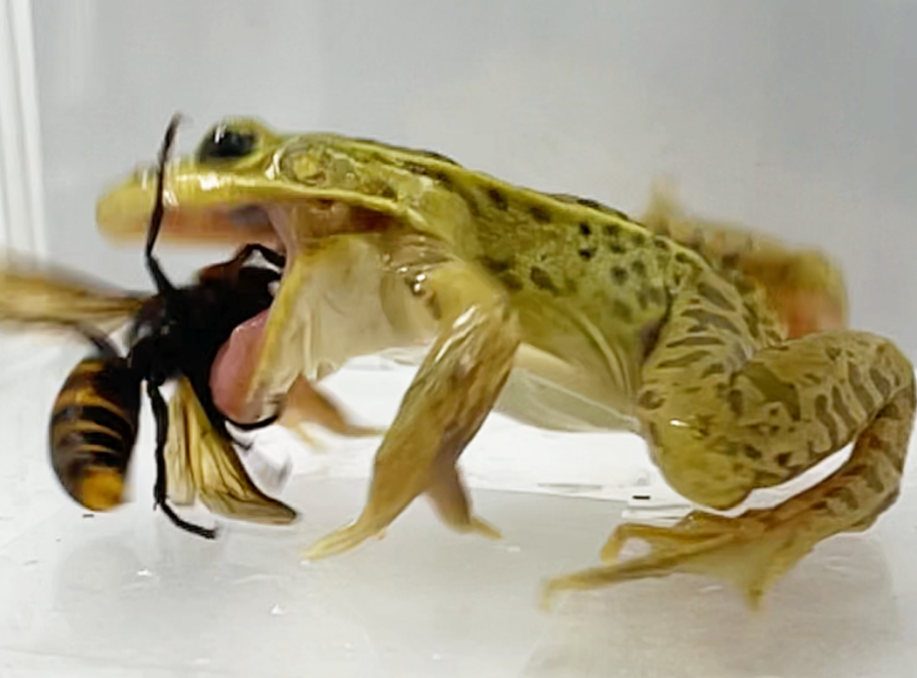
Recent research from Kobe University has unveiled a fascinating example of evolutionary adaptation in amphibians: the black-spotted pond frog’s ability to hunt and consume highly venomous hornets without ill effect. According to a study published in Ecosphere by ecologist Shinji Sugiura, these frogs successfully prey on several hornet species, including the formidable Asian giant hornet (Vespa mandarinia).
In controlled trials, pond frogs were observed attacking hornet workers, even after being stung repeatedly inside the mouth and near the eyes. While a single sting from such hornets can be fatal to small mammals like mice, the frogs showed no signs of physical damage or systemic distress. Success rates were notably high, with up to 93% of frogs successfully consuming their venomous prey.
This discovery suggests a dual resistance mechanism—tolerating both the intense pain and the toxic components of the venom, which typically cause red blood cell destruction and cardiac issues in other vertebrates. Scientists believe these frogs could serve as essential model organisms for future studies on venom tolerance and pain management.
For the herpetocultural community, this research underscores the complex ecological roles and physiological resilience of seemingly common species. Understanding these “hidden” superpowers of amphibians helps further the mission of responsible herpetoculture by highlighting the intricate biological wonders that deserve our protection and study.
Read more info about this topic using the following link.
Read also:
Poison Dart Frogs and Toxicity
Evolution Without Tadpoles: Three New Live-Bearing Tree Toad Species Discovered in Tanzania