 Shopping cart



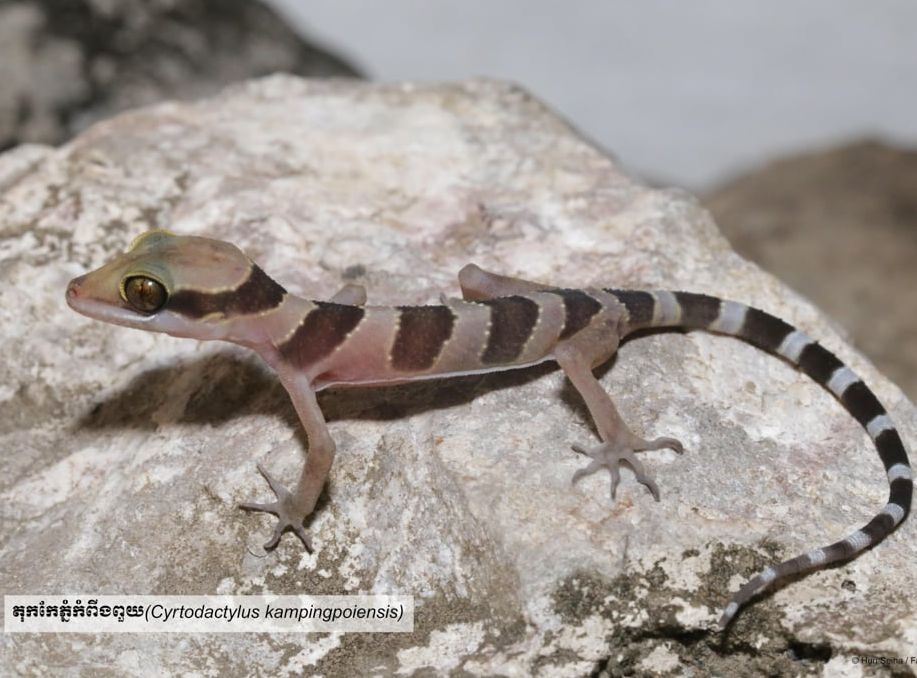
A remarkable new addition to the global reptile inventory has been officially described: the Battambang Karst Gecko (Cnemaspis battambangensis). Discovered in the rugged limestone hills of Cambodia’s Battambang Province, this small, insectivorous lizard highlights the incredible, yet fragile, biodiversity found within Southeast Asia’s isolated karst landscapes.
Karst formations, often referred to as “evolutionary islands,” provide unique micro-habitats where species evolve in near-total isolation. Because these geckos are specially adapted to the deep crevices and shaded surfaces of limestone outcrops, they are frequently endemic to very small geographic areas—sometimes a single hill or cave system. The discovery of Cnemaspis battambangensis adds to a growing list of specialized reptiles that depend entirely on these geological features for survival.
However, the discovery comes with an urgent conservation warning. These limestone habitats are increasingly threatened by industrial quarrying for cement production, agricultural expansion, and unregulated human activity. For species with such restricted ranges, the destruction of even one limestone hill could mean the extinction of the entire population before it can be fully studied.
In terms of responsible herpetoculture, such discoveries emphasize that the preservation of a species is inseparable from the preservation of its habitat. The documentation of new species is a vital first step toward establishing protected areas and environmental regulations. By recognizing the intrinsic value of these specialized reptiles, the scientific and herpetological communities can better advocate for the protection of the “karst islands” that serve as ancient refuges for Cambodia’s unique wildlife.
Read more info about this topic using the following link.
Read also: