 Shopping cart



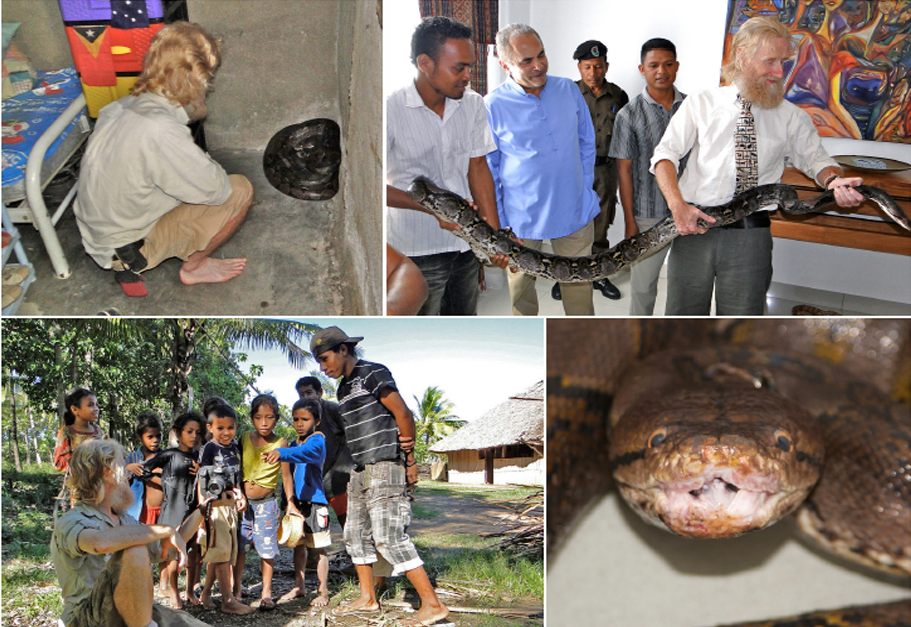
Abstract. As part of an on-going survey of herpetofaunal diversity in Timor-Leste, we documented our observations regarding encounters between local human inhabitants and their reptilian neighbours. Our interest in environmental and conservation education led to the detailed contemplation of five case studies involving reticulated pythons (Python reticulatus), a saltwater crocodile (Crocodylus porosus), a monitor lizard (Varanus cf. salvator), and Chinese pond turtles (Mauremys reevesii). In each case, we initiated a conversation about the captive animals in order to identify their social, religious, or cultural significance, which allowed us to place the captive existence of the animals into their proper context. While the rationale for keeping reptiles captive has some roots in animist beliefs, most often ownership of a ‘pet’ relates to social status. There does not appear to be a serious problem with the exploitation of any one of these species as a diminishing resource, but the casual relationship with wildlife has led to the endangerment of humans in the past and could facilitate initiatives designed to turn a profit from wild-caught reptiles in the future. We here detail five instances of captive reptile ownership and present implications for conservation, case-by-case resolutions, and recommendations for how in such situations public education efforts may be key to developing a deeper, pro-environment stance on the part of the human population in Timor-Leste.
CONSERVATION /IN SITU/