 Shopping cart



Abstract. Natural history museum collections hold extremely rare, extinct species often described from a
single known specimen. On occasions, rediscoveries open new opportunities to understand selective forces acting on phenotypic traits. Recent rediscovery of few individuals of Bocourt´s Terrific Skink Phoboscincus bocourti, from a small and remote islet in New Caledonia allowed to genetically identify
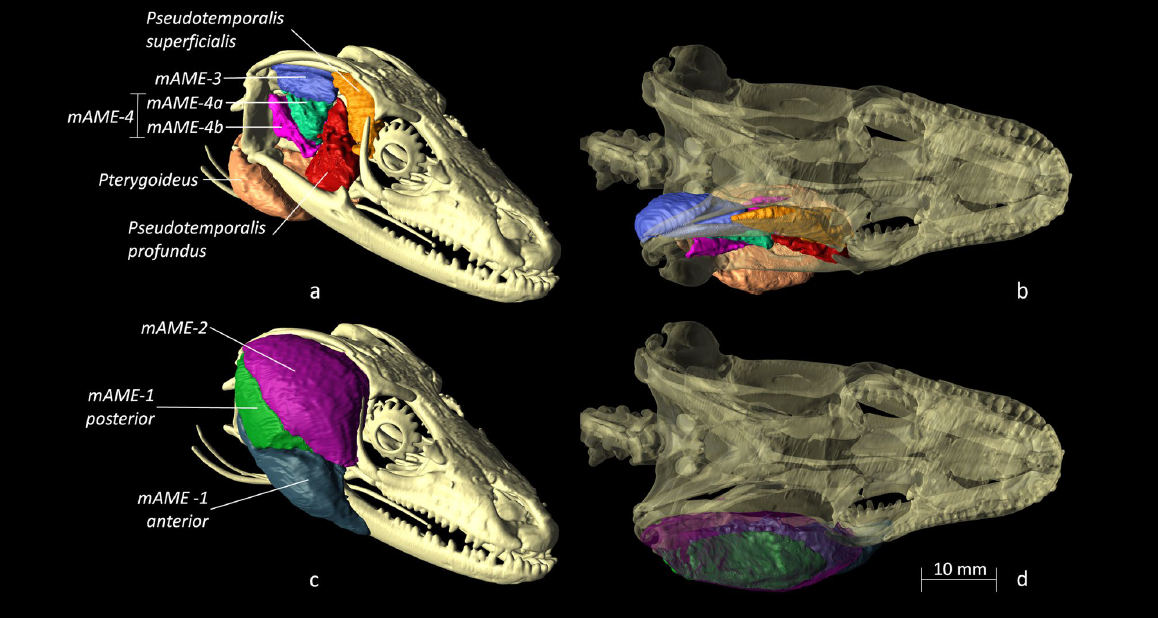
a species of land crab in its diet. To explore this further, we CT- and MRI-scanned the head of the
holotype, the only preserved specimen dated to about 1870, segmented the adductor muscles of the
jaw and bones, and estimated bite force through biomechanical models. These data were compared
with those gathered for 332 specimens belonging to 44 other skink species. Thereafter we recorded
the maximum force needed to generate mechanical failure of the exoskeleton of a crab specimen. The
bite force is greater than the prey hardness, suggesting that predation on hard-shelled crabs may be
an important driver of performance. The high bite force seems crucial to overcome low or seasonal
variations in resource availability in these extreme insular environments. Phoboscincus bocourti
appears to be an apex predator in a remote and harsh environment and the only skink known to
predate on hard-shelled land crabs.
General Useful Articles