 Shopping cart


Philippe de Vosjoli (creator and promoter of Herpetoculture as philosophy and discipline, one of the founders of the “Vivarium” magazine and American Federation of Herpetoculture (AFH)) reflects on the challenges that herpetoculture will face in the coming decades. Among them—biodiversity delusion and inbreeding depression.
From the time we started the “Vivarium” magazine in 1987, a question many of us always had in mind was: If imports were to stop tomorrow, what would herpetoculture be left with in 10 years? In 20 years?
Since then, exports of amphibians and reptiles have undergone waves of availability with a trend toward more restrictions. The modern herpetocultural movement is barely 40 years old. The threat of import shut-downs remains and steadily grows through increasing legislation that not only limits the species available but, above all, shuts down the introduction of new blood to increase the diversity of the limited gene pools currently in zooculture.
In the US, using the Lacey Act as a tool, legislation has shut down the importation of many species bred in other countries, with the consequence that captive gene pools of species of interest to hobbyists may be too small for their populations to survive long-term.
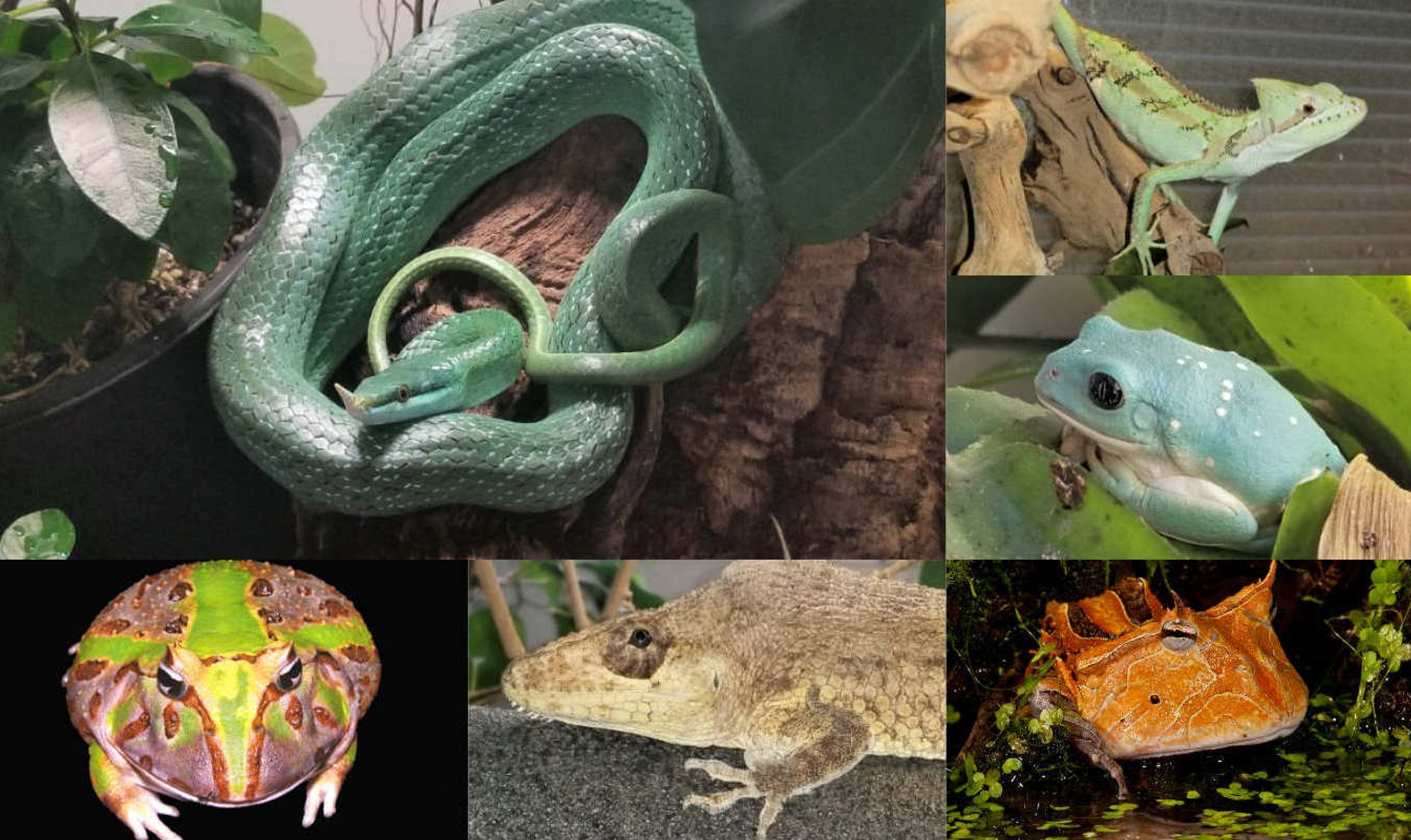
Reptile shows and reptile classifieds sites can give the impression that all is well: great number of species available. Contributing to the diversity delusion is the range of morphotypes of a handful of species that dominate shows and various media, including advertising and social media. There is a basis for the delusion.
Historically we distinguish species by differences in color and pattern. That principle cannot be applied to the current herpetocultural environment. What may appear to the general public as diversity is a handful of species transformed by designer herpetoculture.
What’s the first step
The real picture requires an objective assessment of the biodiversity of self-sustaining populations established in herpetoculture.
A first step if for us to determine criteria to consider a species established as a self-sustaining population.
Criteria include:
- Number of original wild-caught founder stock to reduce risks of inbreeding depression. Ideally, at least 50, but for some species 20 could end up proving enough;
- Number of generations captive-produced in captivity. This depends on generation at least ten generations;
- Fecundity. Species that are highly fecund (many offspring annually) generate so many offspring that the sheer numbers can provide a hedge against the species becoming extinct in herpetoculture; With large numbers, harmful recessive mutations are more likely to become diluted/heterozygous and not combined;
- Ease of care. Species that are adaptable and maintained under conditions that are relatively easy to provide are more likely to survive and breed in the hands of keepers;
- Commercial demand. Demand and price justify the economic and labor costs dedicated to production and maintaining captive populations.
For the sake of it and to assess the current status, let us look at the first four major groups of lizards kept in herpetoculture in alphabetical order: Agamidae, Anguidae, Chamaeleonidae, and Cordylidae.
If imports stop tomorrow
If imports were to stop tomorrow? How many species in these families would meet the criteria for self-sustaining, established captive populations, and how many would remain in herpetoculture in ten years? Add the practice of line breeding for color and pattern and you end up with a high probability of genetic bottlenecks leading to possible inbreeding depression.
Failing to address this is a head-in-the-sand position that will have long term serious consequences. Let’s consider the first family, Agamidae. How many species can be considered established self-sustaining populations? Anyone willing to guess?
Are even 10 species of this large and diverse family established, such that one could assure they would still be in the hobby 10 years from now? Going over the list of families of reptiles and amphibians and making an objective assessment of their status in captivity will let us know the true state of herpetoculture.
Many species that we consider among the most beautiful and desirable of the reptiles and amphibians will disappear from herpetoculture unless we act to increase their gene pools and determine the conditions for multigeneration breeding. This is not a doomsday message, but one that should make us all realize how much cutting-edge work and enterprise is still needed in our field of endeavor. It sets a plan for our future.
As a member of the Responsible Herpetoculture team I would propose that we create a Herpetocultural Assessment Group and put out a call for volunteers to make and maintain an assessment of the self-sustaining status of species by taking responsibility for one or more families.