 Shopping cart


Foreward
In Germany at least, the trend in terraristics is continuing to decline.
This is dangerous, as terraristics have great potential as powerful teaching and conservation tool to prevent some species from becoming extinct. If you’re a die-hard terrarist (also known as herpetoculturist), you also keep more demanding species than just the standards. However, for some projects, such as Citizen Conservation or Responsible Herpetoculture Foundation (RHF), dedicated terrarists are indispensable.
There is a lack of new blood; of young people who are interested in terraristics and want to bring exotic animals home to care for them and study their way of life. However, terrarium keeping is also repeatedly criticized and challenged in public.
Terrarists have to fight prejudices again and again. Fortunately, there are a few schools in Germany, which can even communicate with each other through an association (Ring der Vivariumsschulen), which believes that a school zoo belongs to education.
I would now like to present an example of a German grammar school, The Alexandrinum Coburg, whose school zoo I look after myself, and report on my experiences.
The Gymnasium Alexandrinum’s Experience
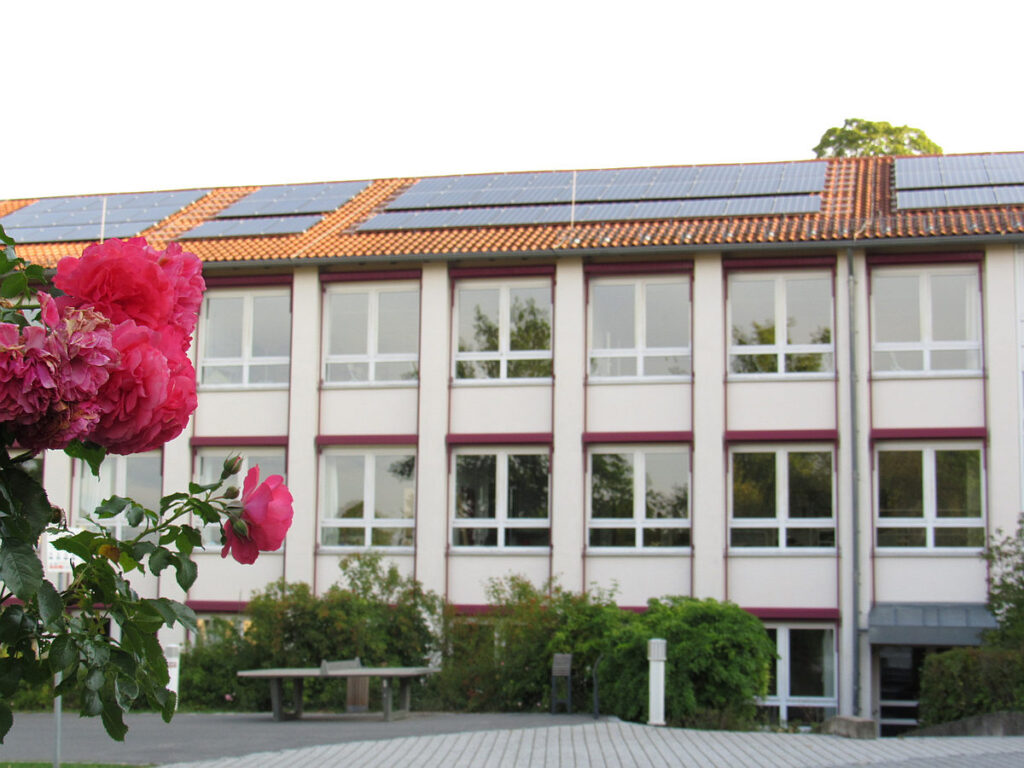
Before I came into the picture, only Indian stick insects (Carausius morosus Sinéty, 1901) and Philippine walking leaves (Phyllium philippinicum Hennemann, Conle, Gottardo & Bresseel, 2009) were kept.
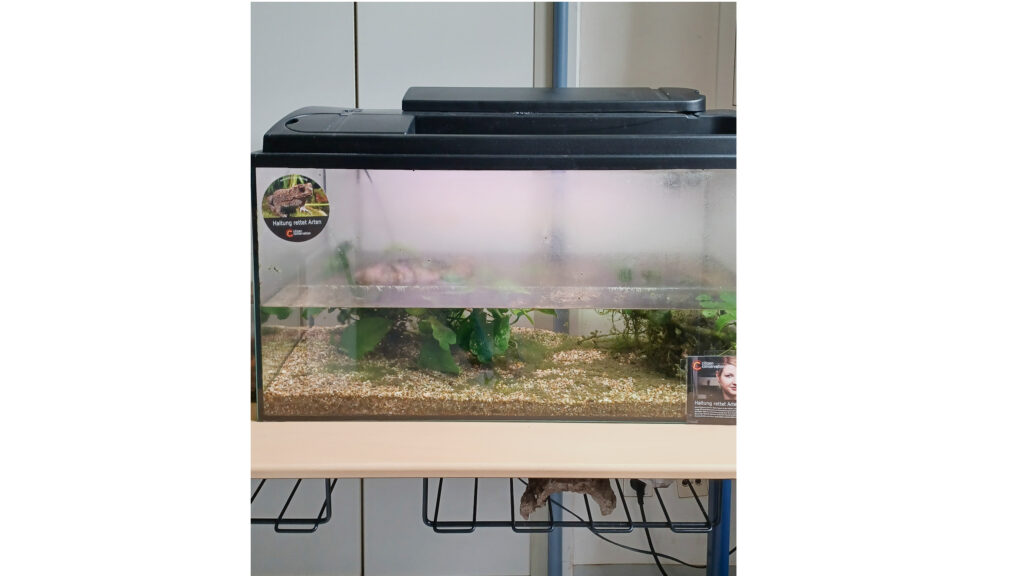
However, this changed quickly: in addition to all the fish, Chinese fire-bellied toads (Bombina orientalis (Boulenger, 1890)) were now added. These came from my own breeding, so I gave 6 eggs to the school. These could be observed by the students in a large aquarium in the middle of the classroom.
The idea was to give the students the opportunity to see the metamorphosis in real time.
In the past, it was possible to take at least the tadpoles of the grass frog (Rana temporaria Linnaeus, 1758), or the larvae of the common toad (Bufo bufo (Linnaeus, 1758)) from the water bodies for a short period of time with the appropriate official permits, and then release the young frogs back at the place where they were caught shortly before metamorphosis.
However, the legal situation has become stricter in the meantime, so that it is not exactly easy to obtain such an exceptional permit. So, the teachers had to limit themselves to models, charts and films about metamorphosis. Then I had the idea to offer the school the possibility, with my support, to observe a small group of B. orientalis during their development from egg to land walker.
And so it happened that one day I brought a little spawn.
The reviews that followed were very positive: when I entered the classroom for my regular monitoring visits, there were often many curious young students who wanted to watch. In their excitement, they had many questions, which I patiently answered.
The teachers described something similar to me: Before the beginning of the lesson, many students stood in front of the aquarium and observed the animals that had become tadpoles in the meantime. However, it quickly became apparent that the interest in the animals decreased the older the youngsters were.
Thus, the younger students showed a lot of interest, while the interest of the older students remained limited. In itself, this was not a big deal. According to the curriculum in force here (high school), amphibians and reptiles are covered in the 6th grade. Therefore, it is very convenient for the teachers to have access to additional material. In the course of time, I came across the organization Citizen Conservation, and so the following idea was born: Why not start such a species conservation project also at this school?
I made an appointment with the director of the school and discussed all the necessary details with him. I also assured him of my full support for the project. And so it happened that a group of B. orientalis was retained for the implementation of the project.
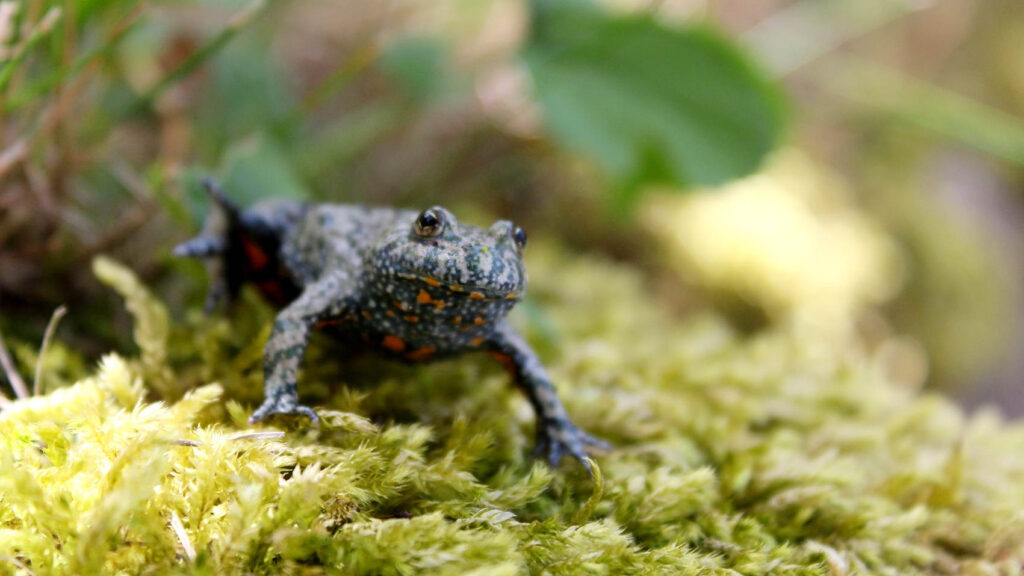
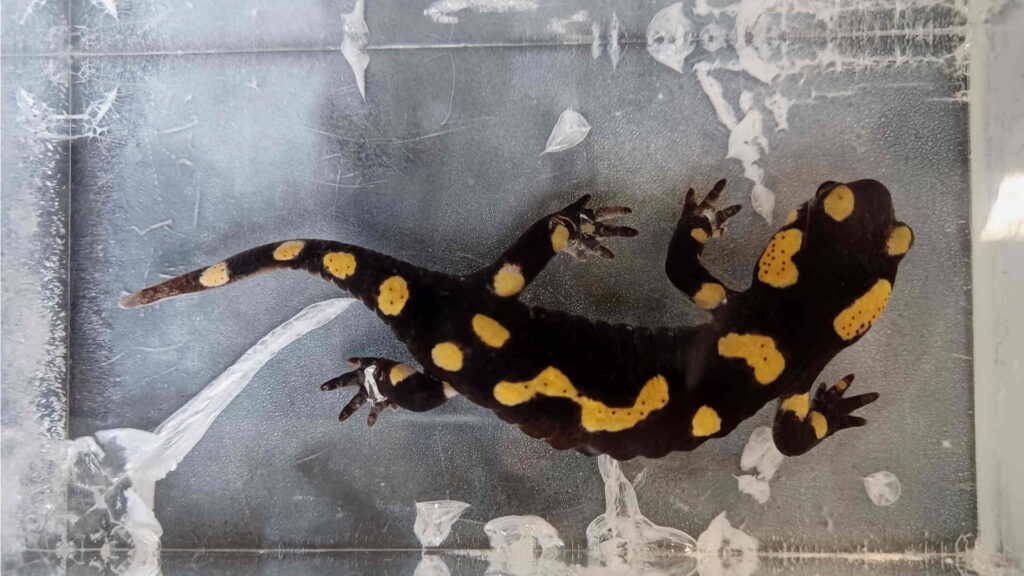
I now care for these young animals on a regular basis, alternating with the teachers. Everything is going so well that I also entrusted them with a small group of the European fire-bellied toad (Bombina bombina (Linnaeus, 1761)). These, however, have nothing to do with CC, but are simply school animals (reported to me).
A few new insect species were also added, such as praying mantises. If everything goes as planned, we can expect offspring soon with all these animals!
The understanding of species conservation
In my eyes it is always important that the young generation—to which I also count myself—deals more intensively with the future.
In addition to global warming, there is also the extinction of species, which in my eyes is clearly underrepresented. It should be the task of every school to deal with such topics more intensively and to provide education.
After all, it depends on the people now whether they change something or not. If they don’t, the consequences will be severe; first and foremost, for amphibians, because according to the IUCN, they are the most affected by global species extinction.
But how can this understanding be created? Many people still have the same aversion to amphibians and reptiles: Amphibians are disgusting and slimy creatures, they say. At least the reptiles are now accepted.
These prejudices should be eliminated first and foremost. In order to understand animals, one has to deal with them. Here it is important that amphibians and reptiles are treated as professionally as possible in the classroom.
I have noticed that some textbooks unfortunately still often contain incorrect information that needs correction. In class, often only superficial information is explained, for example the body structure. It is encouraging that, at least in the case of amphibians, endangerment is now frequently discussed as well. I once read through the teaching materials at the school discussed above.
Most of the reasons for endangerment were often toads being run over on roads during spring toad migrations, but points such as loss of water bodies and climate change were also raised. Attractive possibilities to contribute to the protection of the animals I searched in vain. Beside the theory the practice should not come too briefly: I think it makes sense to take a trip into nature in spring to have a look at the animals in reality.
Such excursions create a kind of connection directly and can thereby achieve that the children attain more understanding for the endangerment of these species. In summary, it can be stated that a lively biology lesson does justice to such a matter. The biology module in particular is a subject with opportunities to teach things outside, unlike subjects like math or Latin.
A good advance in the direction of species protection is offered by school animals: Certainly, all species require a specialized knowledge, but there are always species that are best suited for the beginner or beginners. If the terrarium animals are then still used for teaching, there is not much in the way of understanding.
Meanwhile, on Internet platforms one finds good reports, and also documentations which make an optimal introduction or an ideal conclusion of the instruction unit possible.
It is important to take away the fear of reptiles, amphibians or insects. I could observe that many children asked me out of curiosity if they could take the animals in their hands or feed them themselves. Such questions always pleased me, because they showed that a little progress was happening.
Otherwise, many schools have electives that can be taken voluntarily. Here, at schools with vivaristics, it is not uncommon to have a course of the care of the school zoo. I have already been able to exchange information with many other schools and I have been told that the electives are gladly taken.
Suitable amphibians and reptiles for the school zoo
Which species and how many animals are kept at a particular facility can be quite different and probably depends on several factors. The fact is that such a school zoo also makes work.
If only one person takes care of the animals, then logically fewer animals are often kept. If, on the other hand, there is a group responsible for the care, then more animals can be cared for. I think it is self-explanatory that in schools rather easily maintained species are kept. Beginner species and attractive animals are ideal ambassadors.
Sometimes there is a teacher who has already gained private experience in keeping animals.
But every now and then one changes completely to new species.
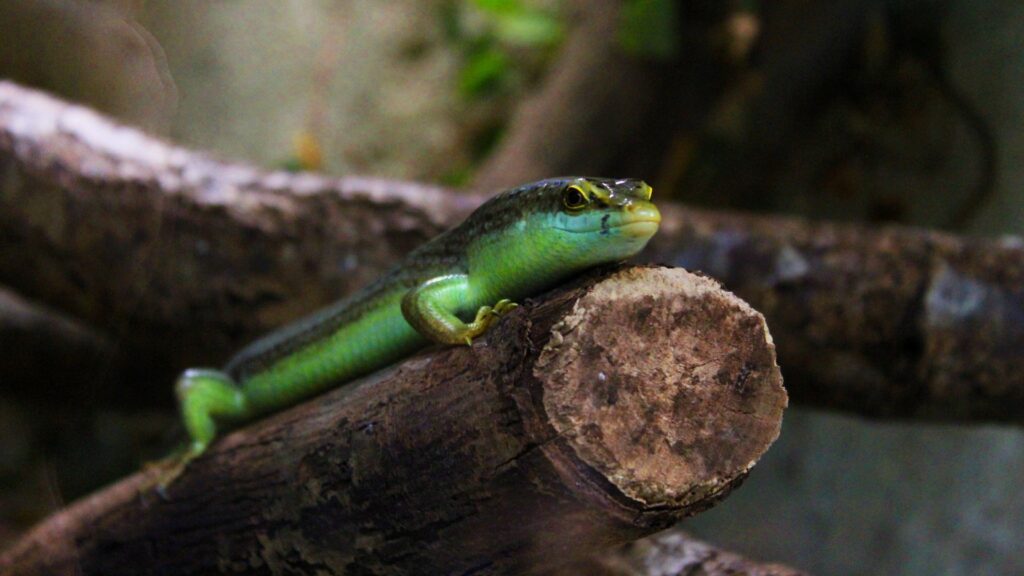
Recommended reptile species for the school zoo could be different geckos (such as house geckos, leopard geckos or maiden geckos), some agamas (e.g., bearded dragons), but also snakes (e.g., corn snakes) or skinks (like the apothecary skink).
If one has enough space or a protected school garden, one could also switch to turtles, for example land tortoises or broad-edged tortoises. In addition, water turtles are kept from time to time. It is similar to amphibians: from my own experience, I can warmly recommend the Chinese fire-bellied toad. Others keep newts, such as fire-bellied newts, and still others keep axolotls.
There are also beautiful species of salamanders.
Among frogs, it is not uncommon to find dwarf clawed frogs or coral finger frogs. It is important to note that some species must be reported or are under special protection. For example, Washington Convention on International Trade in Endangered Species or the IUCN Red List.
Use of models and preparations in biology lessons
In almost all schools, models or preparations are used to illustrate facts. These are usually skeletons, preservations or stuffed animals. In the case of teaching herpetology, I found snake skin, models of native species, skeletons, old shells of turtles, but also taxidermied animals, such as chameleons, or tortoises in the biology collection at Gymnasium Alexandrinum.
Snakes, in turn, were preserved in spirit. This rather large collection resembles that of a museum and is probably unique, because nowadays it is difficult to get such tools. Moreover, they are not quite inexpensive. In addition, posters in the teaching rooms beautifully illustrated genera or occurrences of individual species.
Contribution to species conservation
Environmental education is becoming more and more important, and schools should follow suit. Especially in our schools it is important, because “our future” is taught there.
For organizations like Citizen Conservation, or RHF, school zoos are very helpful, because many points are fulfilled at the same time. On the one hand, promotion of education can be achieved, but also that some deeper understanding of the natural world is created.
On the other hand, breeding programs through schools can have a positive effect on the conservation of certain animal groups in terraristics. In Germany there is the Ring der Vivariumschulen.
This association of several schools is there so that the schools can exchange information with each other. Through it, teachers from all over Germany can share their experiences.
In addition, it is possible to exchange animals among each other. So that one can also quickly get hold of unrelated animals. At the annual conference exciting lectures are held and the participants can get to know each other personally.
Closing words
I see great potential in school vivariums and in herpetoculture as a conservation tool. If more schools get into the concept, then schools can become an important component for species conservation projects. It is significant that the next generation is appropriately well-trained.
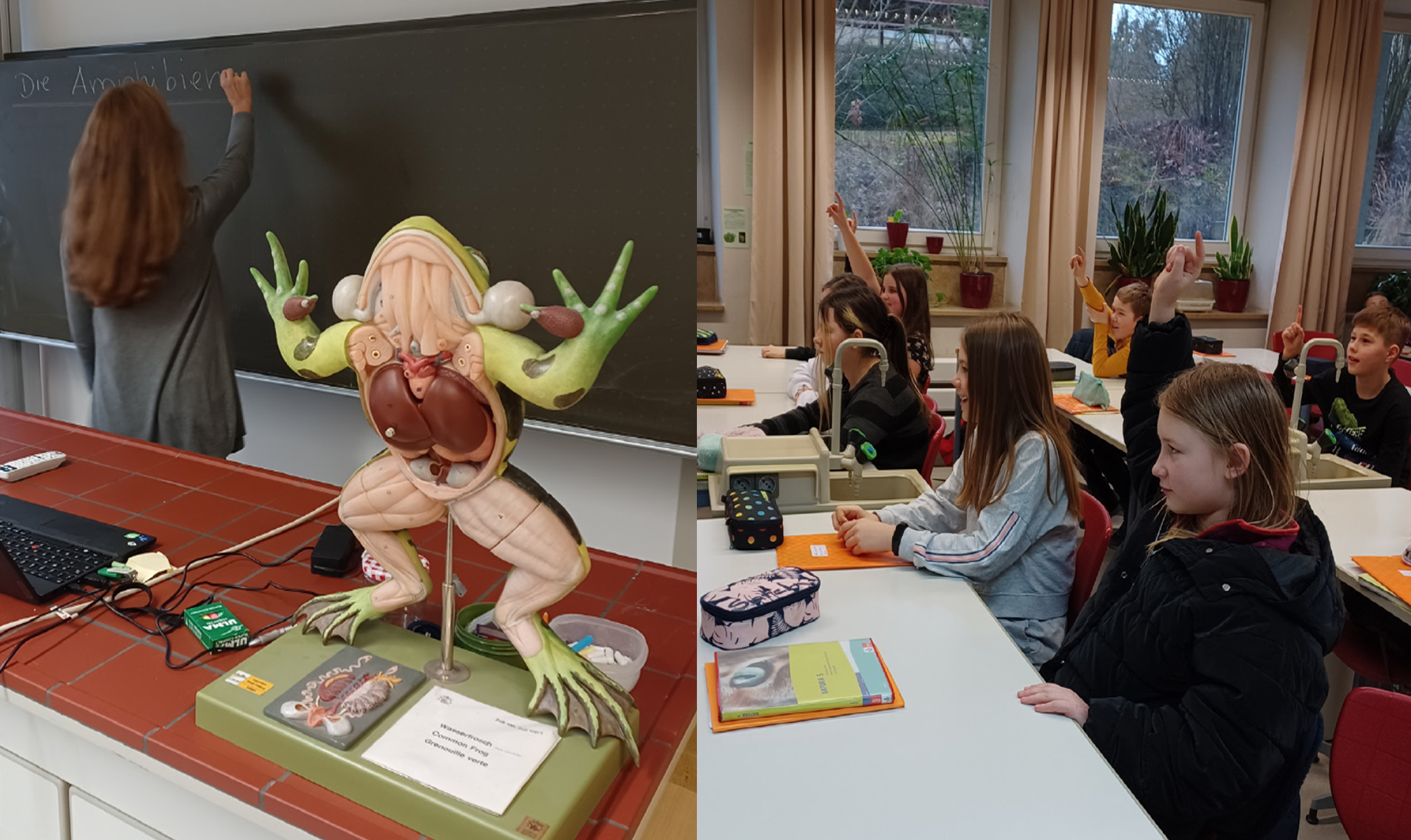
In 2022, for example, I gave a talk on amphibians at an elementary school. The enthusiasm of the children was literally written all over their faces. I am excited about the direction it will take.
