 Shopping cart


Foreword
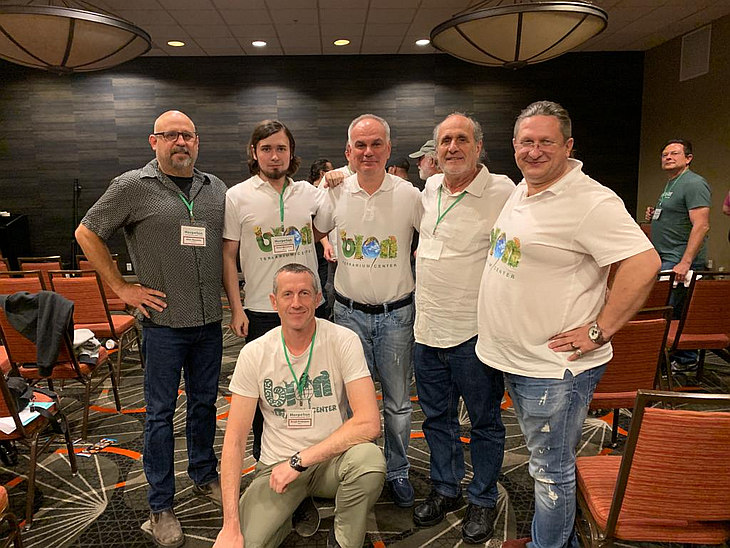
In 2019, at the Herpeton Conference in San Diego, Dmitri Tkachev and the BION Terrarium Center team introduced their vision for an organization called Responsible Herpetoculture. As an example, they presented their work with Parson’s chameleon. Their assessment of its status in the wild, and their project for the conservation through both in situ and ex situ captive propagation of threatened distinct populations.
Now after more than two years, the Responsible Herpetoculture Project is transforming into the Responsible Herpetoculture Foundation to address some of the most critical issues facing Herpetoculture, its role in society and culture, and the conservation of amphibian and reptile species.
Later, the organization became formalized, and one of their first steps was to produce a high-quality interdisciplinary journal, Responsible Herpetoculture. As a former founder and publisher of the Vivarium magazine in the US, the journal exceeded my expectations for its high quality of content and superb design. I was honored when Dmitri asked me to join the Responsible Herpetoculture board. We both shared a common vision for the future of amphibians and reptiles in human society and culture, and for their preservation in nature.
Two years later
As I write this, all the signs point to a world in a state of crisis. This includes the fate of amphibian and reptile species. It also appears to me that major change is necessary and that, difficult as it may be, it is time for a reset, a reevaluation of our respective strengths and a willingness to develop new cooperative interrelationships between the private, scientific, zoological, conservation and government sectors. In a rapidly changing world, the politically current trend for ever-increasing restrictions and protections means little when habitat continues to be destroyed or degraded, and a massive scale of biodiversity loss and decline is in process.
Too often I see countries claim species are protected while they destroy thousands of acres of habitat for agriculture, logging, or the creation of dams, resulting in the displacement and slaughter of animal populations on a scale which to date has been mostly unreported.
The crises threatening biodiversity are tied to the crises and economic prospects of humankind. The big question will be “When the lives of thousands of humans are in jeopardy, will countries be able to continue to uphold policies that protect habitat and species?” Finding more integral solutions that also have ethnoherpetological benefits would seem like a course worth pursuing.
These changes will not occur overnight, but we can start by making baby steps toward more open-mindedness, more communication, more cooperation and putting aside what may now seem politically correct but not necessarily beneficial positions with regard to the future of biodiversity. It is a time for reset and for thinking outside the box.
Responsible Herpetoculture Foundation goals and tasks in details
When we first launched Responsible Herpetoculture, our motto was “When conservation is not enough…”
As I write this, I feel we need to add another motto “From the few…many”.
This has always been the position of the core founders of herpetoculture whose primary goals were:
- to establish self-sustaining, captive-bred populations rather than the mass collection of amphibians and reptiles from the wild;
- to develop the methods and broad base of knowledge to successfully breed multiple generations of amphibians and reptiles, including rare species, from a relatively small number of founder stock.
The value of this knowledge when applied to creating ex situ and in situ breeding programs to prevent the loss of species is obvious. But this motto also applies to the role of Herpetoculture in society and culture. It emphasizes the important role of the few to create beneficial change through:
- innovation;
- coordination of action;
- the sharing of information;
- the forging of new relationships.
I should mention here, as an example of the actions of a few impacting the many, the critical role of manufacturers and herpetocultural supply companies (yes, many are sponsors of Responsible Herpetoculture). Their development of products, from enclosures to special lighting and heating, landscape elements to provide environmental enrichment, diets, and supplements, has been instrumental in the advances and success of the field, resulting in the remarkable improvements in husbandry, display, and welfare we see today.
It is with the spirit of open mindedness for developing innovative, outside the box programs that we have launched the Responsible Herpetoculture Foundation.
We invite members of the different communities, biological, herpetocultural, educational, and regulatory to join us in developing engaged, and responsible cooperations to address the many issues related to the future of amphibians and reptiles. In short, we want to be part of the solution.