 Shopping cart



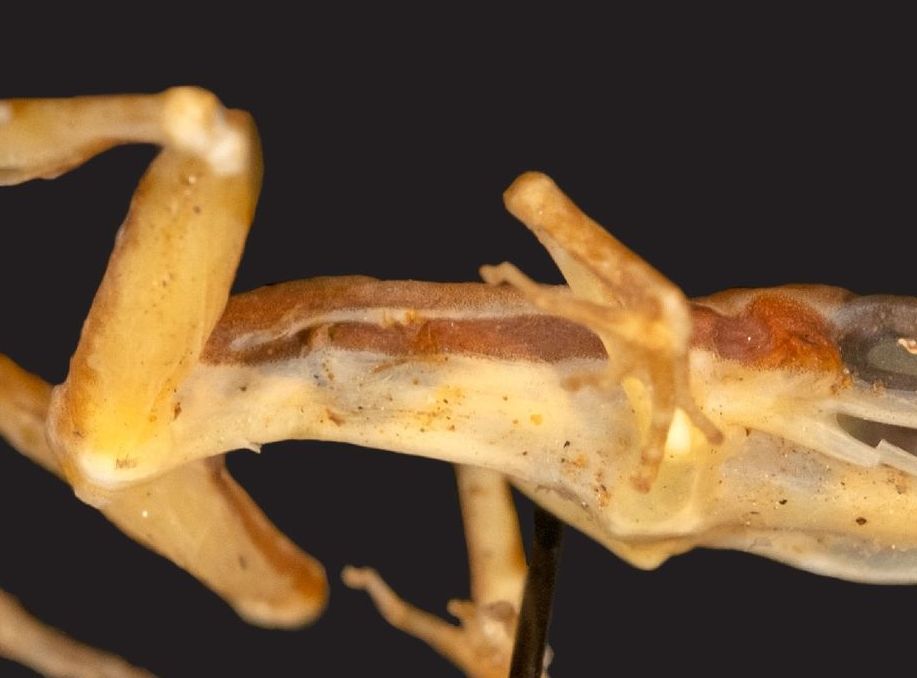
The herpetological community has been reminded once again that natural history museums are not merely warehouses of the past, but “biological time machines” holding yet-to-be-described species. A recent study by researchers at the Smithsonian National Museum of Natural History has officially introduced a new species of poison dart frog to the world: Excidobates talamanca.
The most remarkable aspect of this discovery is that the description was based on a single specimen collected from the tropical forests of the Talamanca region in 1962. For over six decades, this tiny frog remained preserved in alcohol, waiting for the right moment and the right technology to reveal its secrets. Modern advancements, including micro-computed tomography (micro-CT) scanning and DNA analysis, finally allowed scientists to confirm that this was indeed a unique representative of the genus Excidobates, previously unknown to science.
However, the excitement of the discovery is tempered by a somber ecological reality. The region where this specimen was found more than half a century ago has undergone massive transformations due to the expansion of coffee plantations and the shifting climate. There is a very real concern that Excidobates talamanca may have been pushed to the brink of extinction—or perhaps lost entirely—before it even received a formal name.
In terms of responsible herpetoculture, this event underscores the critical importance of an ethical, data-driven approach to biodiversity. We cannot protect what we do not know exists. Responsible engagement with herpetology involves not only the high-standard care of living collections but also the support of academic research that identifies vulnerable species.
This find serves as a powerful testament to the value of scientific collecting and museum archives. It calls for a deeper commitment to protecting remaining wild habitats so that future generations might study these “living jewels” in their natural environments, rather than only discovering them in museum jars.
Read also:
Dying for the Shot: How Unethical Photography Threatens the Galaxy Frog
From Scales to Science: How Snake Physiology Could Cure Gout