 Shopping cart



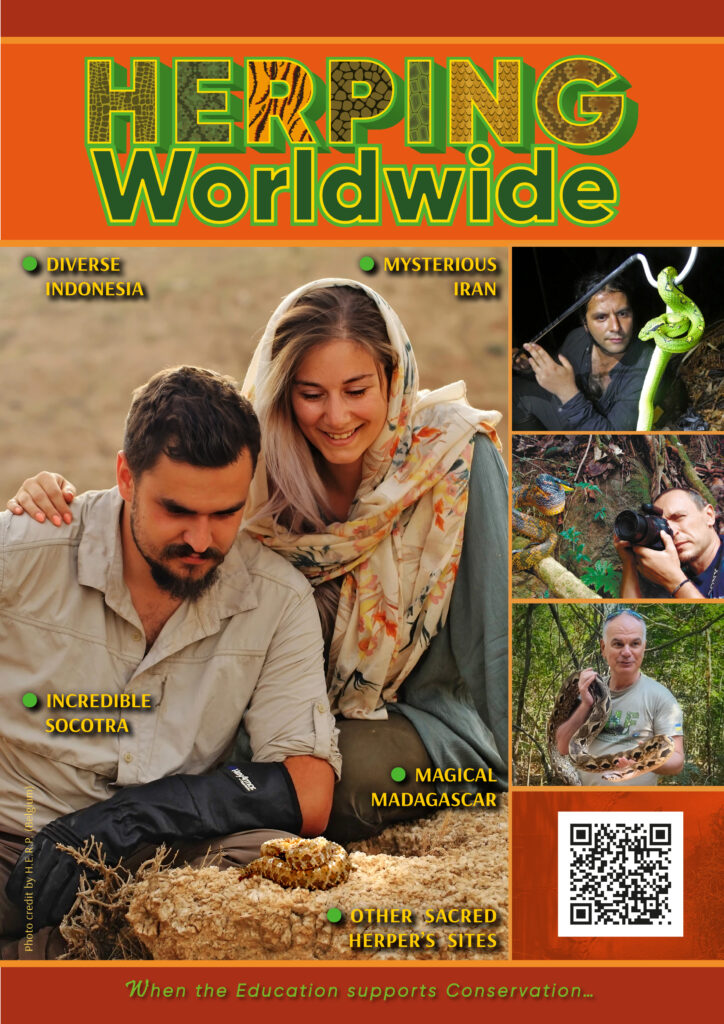
Herp-related tourism or “herping”, the herpetological version of bird watching, is on the rise and there are many reasons for this. They include:
- Greater opportunities for travel around the world
- A personal need for broader knowledge and experiences, not only about nature but also of other human societies and cultures (field herping invariably involves human interactions).
- Personal desires to see the subjects of a hobby in their natural habitats
- To experience the immeasurable sense of unity with Mother Nature
- The need for a perspectival reset, away from the noise of the modern, technologically driven world, to remind us of the diversity of sentience/mind in nature and the foundations of our existence. To refresh one’s spirits with like-minded people in our specialist hobby and community.
- Citizen science. Like bird watching, locality notes and photographs contribute to the body of knowledge on species, their variations, and distribution. Thus, many field herpers are also citizen scientists that post their findings on sites like iNaturalist.
When we refer to ‘herping’ we are talking about civilized ecotourism, which unites dedicated people armed with photographic equipment, note pads, knowledge of the laws, and an understanding of ethical standards of behavior in nature. It does not involve catching reptiles or amphibians for commercial purposes and taking them outside their biotopes. For those wanting more information on this topic, guidelines for responsible field herping can be found on various internet and social media sites, forums, and organizations.
Many of our colleagues and contributors are engaged in herping during field trips and scientific research. Popular countries today include the USA, Namibia, Morocco, Tanzania, Madagascar, Costa Rica, Peru, Guatemala, Mexico, Costa Rica, Malaysia, Indonesia and Australia. We have even published travel materials from more difficult to access locations, such as Iran and the Island of Socotra (Yemen), and plan to continue to delight our readers with rare and exclusive routes.
Our Editors, Thomas Marriott and César Luis Barrio-Amorós plus our regular authors, Bryan Minne, Laura Ruswelt, Lee Warren, Rene Villanueva Maldonado and Petr Nechas not only have unique herping experience, but are talented authors as well.
As a herpetoculturist and naturalist, I have had the opportunity to herp in Pakistan, Uzbekistan, Kazakhstan, Kyrgyzstan, Mexico, Guyana, USA, Indonesia, Malaysia, Madagascar, Armenia, Georgia, Ukraine and other countries.
This special issue “Herping with RHJ” includes new and existing “favorite” articles on field herping across the world. Thus, readers of this publication (which will be published in a digital version and regularly updated with new materials) will receive a dynamically-developing informational source on the topic for their use.
As a side note, the Responsible Herpetoculture Journal is always open to receiving materials from field herpers looking to share their adventures and experiences.
Future articles in “Herping with RHJ” related to field herping will address how to properly photograph amphibians and reptiles in their natural habitats and what travelers need to know about tropical medicine.
If you subscribe to the Expert’s level of RHF membership, you will have free access to this and other RHF special editions
Happy Herping with the Responsible Herpetoculture Journal!
Dmitri Tkachev,
Editor-in-Chief