 Shopping cart



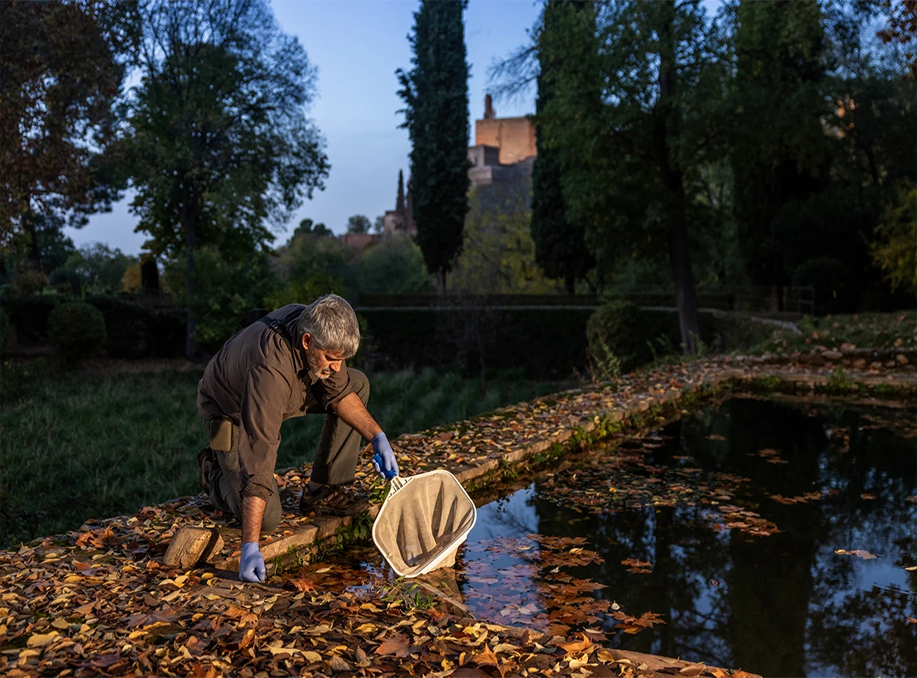
In this photograph, taken just after sunset, when amphibians are active, Juan Ramón Fernández Cardenete is checking the number of Iberian ribbed newts (Pleurodeles waltl) in the pool in the Alhambra palace and assessing their life stages.
“The Alhambra palace, overlooking Granada in southern Spain, is one of the finest preserved examples of Moorish architecture, dating back to the thirteenth century. I’m employed by the palace’s management body to study the biodiversity in this vast complex — which has more than 2.5 million visitors per year. We manage the water features and gardens of the Alhambra palace, not only to enhance their aesthetic appeal but also to protect their wildlife, with a focus on amphibians.
When he began working here, only two amphibian species remained; the others had disappeared owing to water pollution. These pools are common in the Alhambra, but much of the wildlife has been lost in recent centuries. Now, thanks to reintroduction efforts and careful management, four species are thriving. The individuals he is observing today are the direct descendants of those he released years ago.
Read more info about this topic using the following link
Read also:
Herpetologists Sound Alarm at Iberian Herpetology Congress 2025
Biologist Telling About Evolutionary Race Between Hungry Snakes and Toxic Newts