 Shopping cart



by César L. Barrio-Amorós, Editor for Latin America (RHJ), Scientific Director, CRWild
(www.crwild.com cbarrioamoros@crwild.com),
Costa Rica
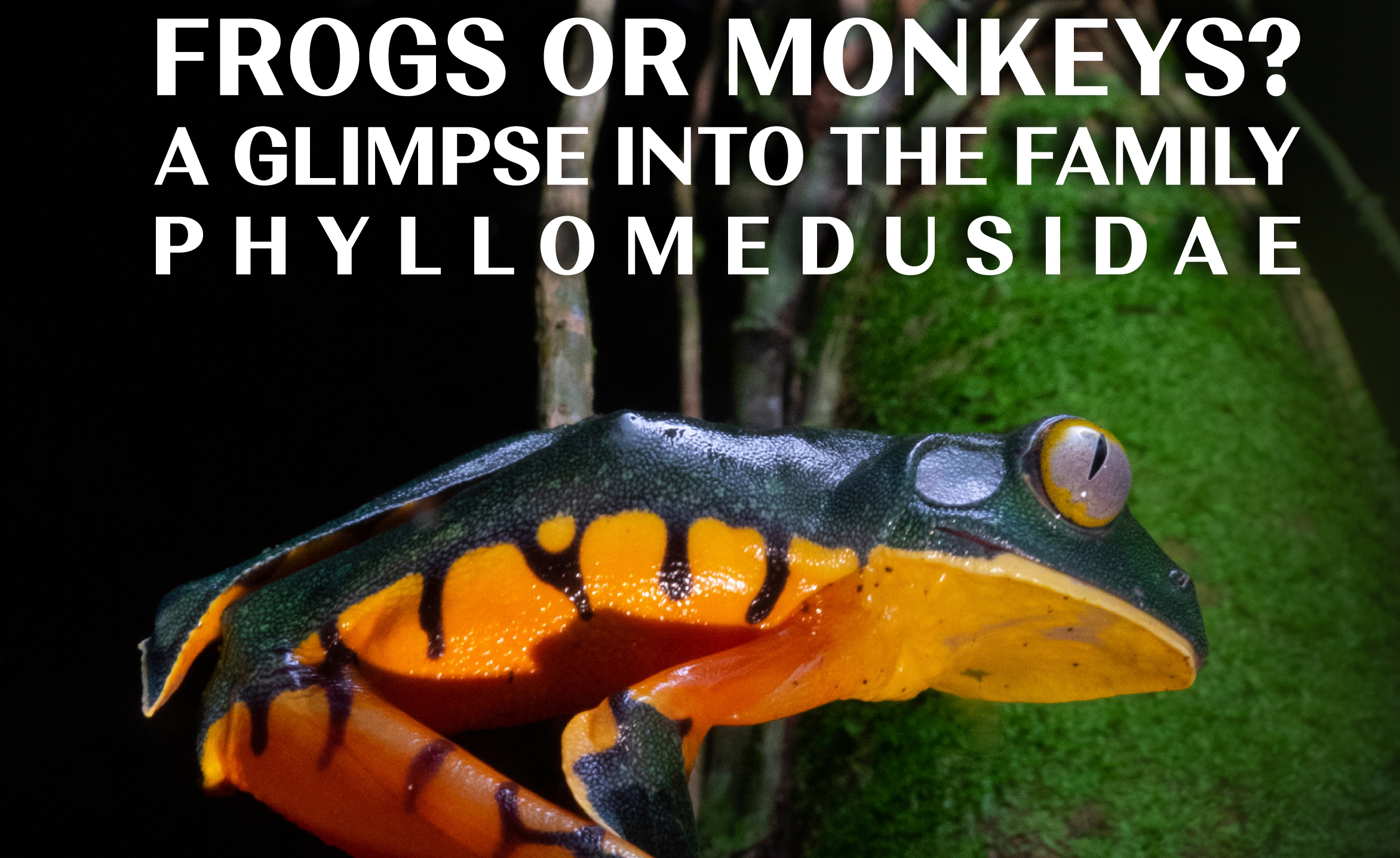
In the vibrant tapestry of the Neotropics, few amphibians capture the imagination quite like
the leaf frogs of the family Phyllomedusidae (Günther, 1858). Often referred to as “monkey
frogs,” these charismatic anurans are distinct from their tree frog cousins (Hylidae) not only
in their genetics but in their behavior. While most tree frogs jump, phyllomedusids walk.
They possess opposable thumbs on their hands and feet, allowing them to grasp branches with a
deliberate, hand-over-hand gait reminiscent of a primate.
Historically considered a subfamily (Phyllomedusinae) within the Hylidae, recent
extensive phylogenetic analyses support their recognition as a distinct family (Duellman
et al., 2016). These frogs are restricted to the Neotropics, ranging from tropical Mexico to
Argentina, so all countries in the Americas except Chile, Canada and United States. They
are famous for their physiological adaptations to prevent water loss—such as secreting
lipids to coat their skin—and for their striking coloration, often concealing brilliant “flash
colors” on their flanks and limbs that dazzle predators when the frog moves, and one
species at least is used by local indigenous cultures as a medical ceremony.