 Shopping cart



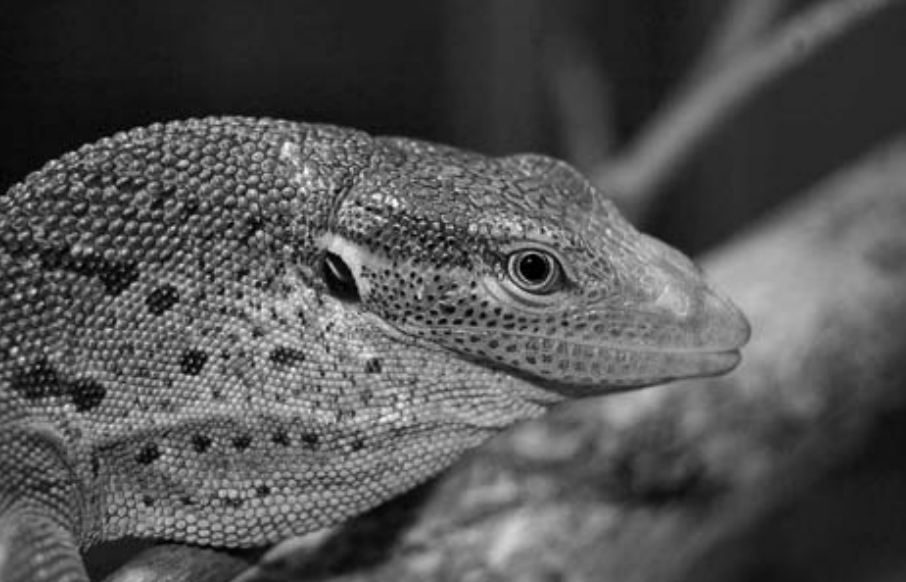
Abstract. Varanus prasinus, commonly known as the Green Tree Monitor, is a gracile lizard reaching a total length of less than 1 m. Ground color is light to emerald green with some black markings from
nape to tail base, usually as lines or chevrons across the back. First described by Schlegel in 1839, this member of the family Varanidae is native to the Cape York Peninsula of Australia, most of New Guinea, and some surrounding islands. Green Tree Monitors lay 2–5 eggs that hatch after 150–190 days. They are
notorious for consuming their own eggs in captivity. In the wild, they inhabit the canopies of remaining lowland forests at elevations to 500 m. Little is known of their habits in the wild. Although highly arboreal, these animals are excellent swimmers with keen eyesight. Varanus prasinus is reported to lay its eggs in
arboreal termite nests. Wild hatchlings probably eat termites or termite eggs. Green Tree Monitors are very wary, nervous animals, fleeing for cover at the slightest disturbance. The prehensile tail is nearly twice the snout to vent length and is used for balance and as a stabilizer or fifth limb when moving through
trees, on the ground, or in water. They will curl their tail tightly and flatten their necks dorsally and ventrally to appear larger when in defense mode. The tongue is long and forked, and is used to gather scent molecules, which are interpreted by using the Jacobson’s organ in the upper palate. Varanus prasinus has very sharp teeth that are used for subduing prey such as invertebrates, mice, lizards, frogs, birds, and bird eggs. Teeth also are used for defense, as is the expulsion of fecal material.
CONSERVATION /IN SITU/