 Shopping cart



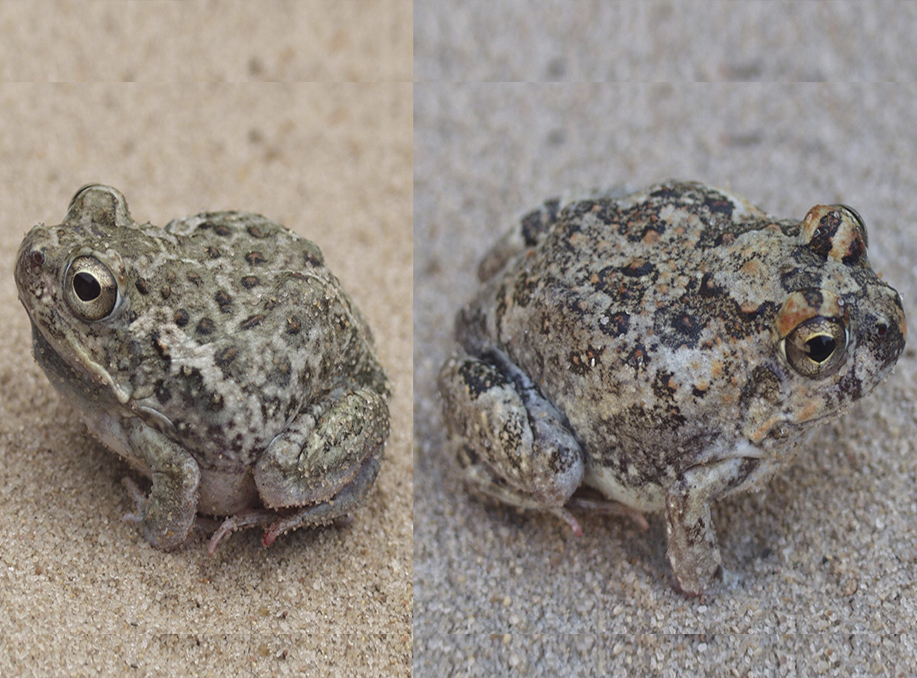

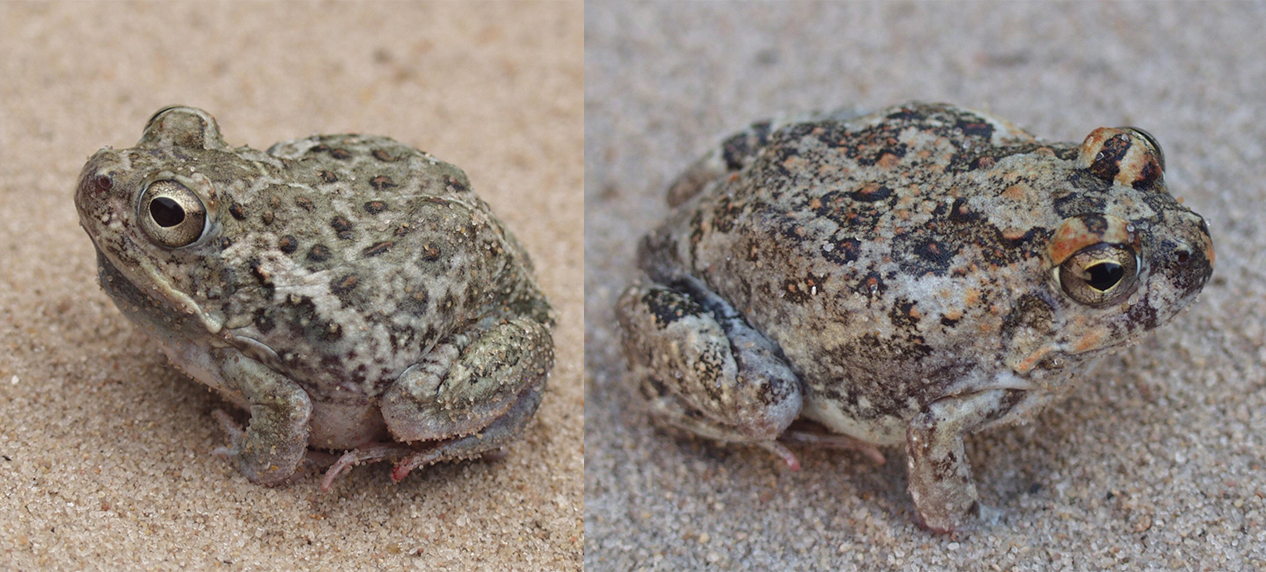
An Endangered Wildlife Trust ecologist recently joined two other South African researchers to confirm the discovery of a new sand frog species in the genus Tomopterna in Mozambique’s Banhine National Park.
In findings published in ZOOTAXA, EWT ecologist Darren Pietersen, North West University’s Alan Channing and the SA Medical Research Council’s Abeda Dawood describe this new frog species, which they name Tomopterna banhinensis after the type locality, as a species that can be distinguished from all other described species of sand frogs by several characters.
The research shows that the species of sand frogs are very similar in overall morphology, no doubt the reason why so many cryptic species were unrecognised, or synonymised with the Cryptic Sand Frog (T. cryptotis)—which was believed to be a single widespread taxon.
Sand frogs are widely distributed in sub-Saharan Africa, excluding the rainforests of central Africa. They are usually found on sandy soils, although the Eastern Beaded Sand Frog (T. pulchra) and Natal Sand Frog (Tomopterna natalensis) are prone to inhabit more rocky habitats.
While this species is presently only known from Banhine National Park and the area around Beira in Mozambique, it is likely to be more widespread than present records suggest, occurring widely across the Mozambique plain, possibly including extreme south-eastern Zimbabwe (specifically Gonarezhou National Park), to which the sandveld and drainage systems of Banhine National Park are linked.
Read more info about this topic using the following link
Read also:
Frogs are Screaming—We Just Can’t Hear Them
Up to 32 Harlequin Frog Species Thought to Be Extinct May not Be, New Research Shows