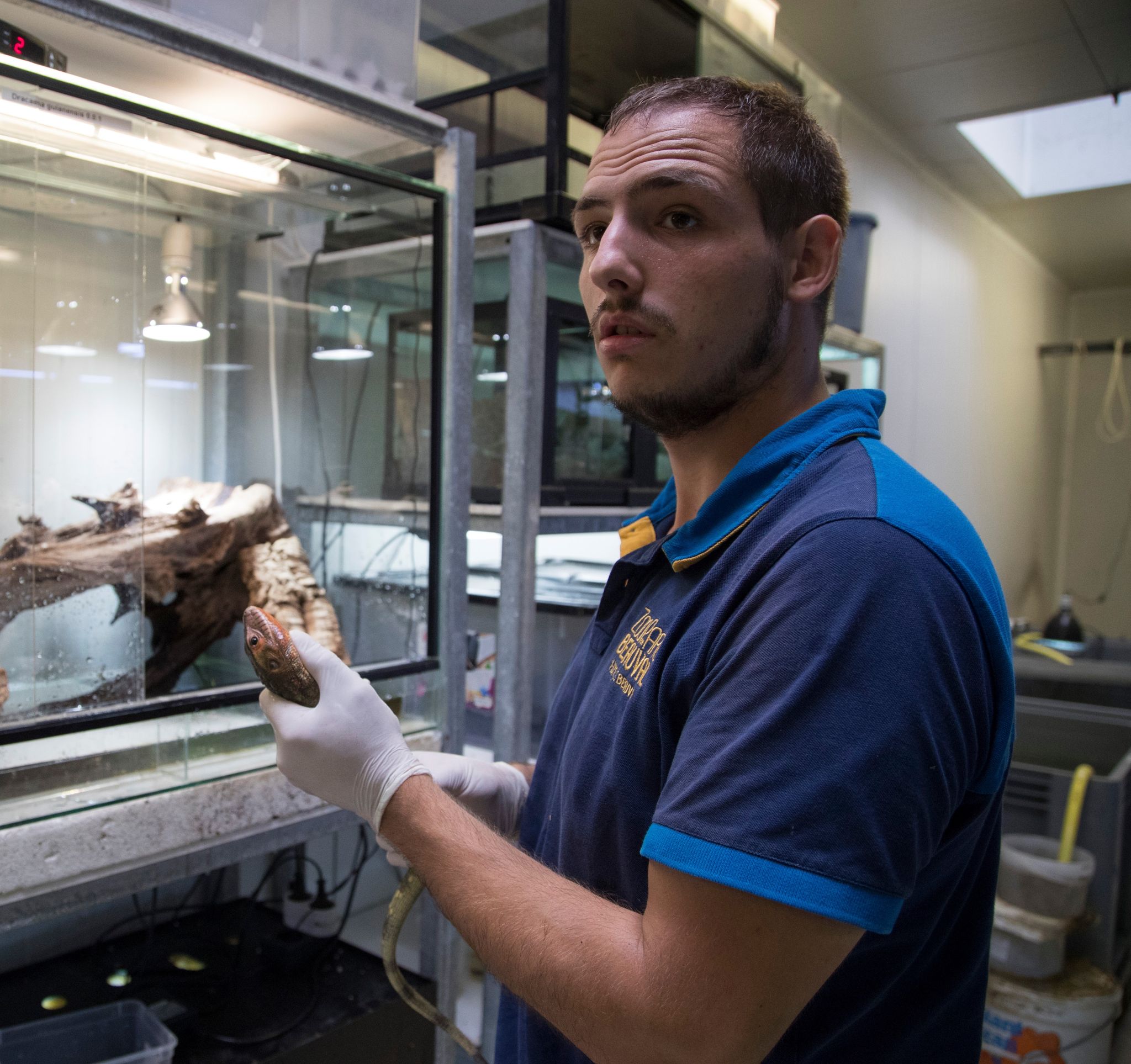
Having been initiated once as a hobby, herpetoculture (known in Europe as terrariumistics) brought together hundreds of thousands of people passionate about the idea of keeping and breeding amphibians and reptiles in their homes, yards and farms.
Step by step this movement has grown into a large community of enthusiasts and professionals, scientists and hobbyists who know and understand the needs of amphibian and reptile husbandry better than anyone else.
Currently, the biggest national and international threat to the future of herpetoculturists is our quite limited opportunities for promoting our accomplishments and upholding a value system to count the unwarranted criticisms of exploitation and commercialization of amphibians and reptiles, the role of pet trade in the introduction of invasive species.
Consequently, almost all significant positive effects, features and achievements of herpetoculture are generally ignored, facing directional pressure of pre-paid activism, lobbying and hence widespread misunderstanding. This should be definitely changed!
The mission of the radical animal protection is to put an end to the global live exotic animal trade and to ban of our right to keep and breed amphibians and reptiles in order to ruin our world and our life. Our opponents do nothing to protect habitats and biodiversity; they just serve the needs of global industries invested in agriculture, mining and building of resorts and recreation places. In fact, no government would like a notion that wild nature is being destroyed by the economic activities of large industries, payers of huge taxes. As a result, one of the culprits was assigned to herpetoculture. In theory, such organizations as IUCN, CITES and WAZA declare support or captive breeding of rare species in order to create their reserve populations. In practice, today this applies to zoos only. The main reason of such ignorance is lack of activity from our side.
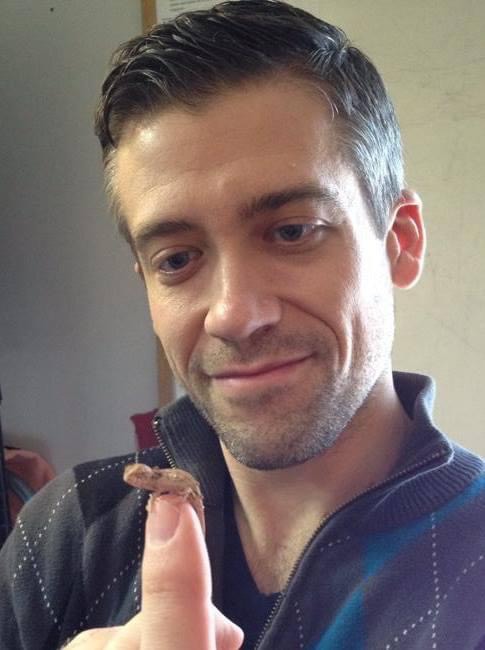
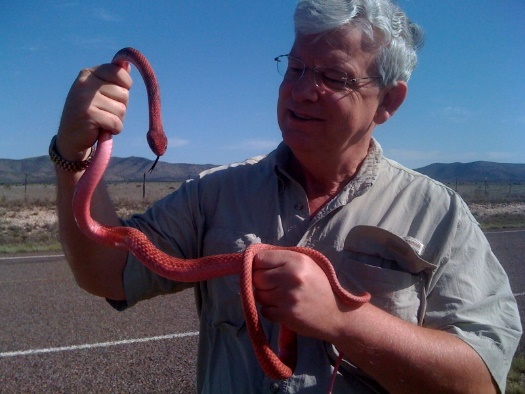
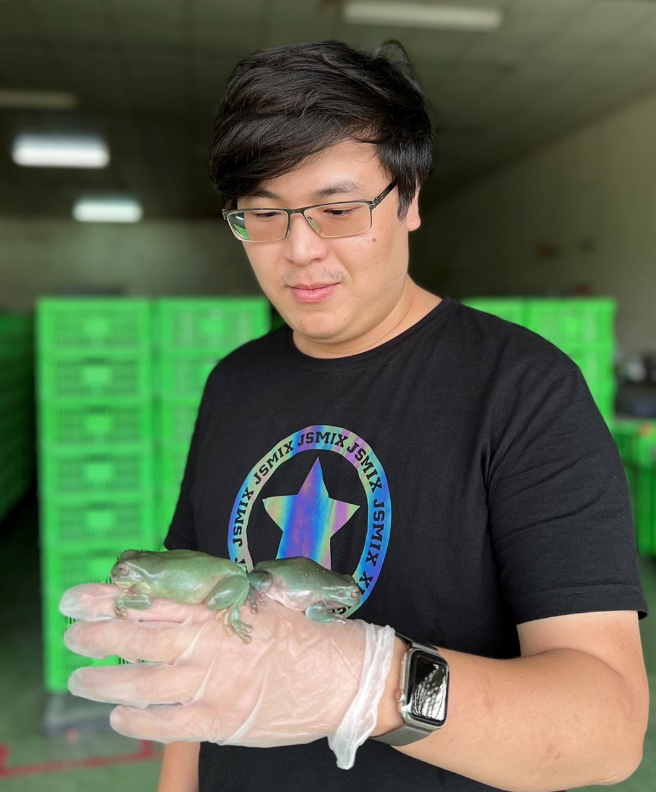
On behalf of our international team, including private breeders and experts from different countries, we launch a Responsible Herpetoculture Foundation (RHF) aimed at involving the private sector (together with zoos, science and conservation) in creating and maintaining ex situ populations of captive-bred reptiles and amphibians to use their unique experience, capabilities and potential, on the one hand, and to raise their authority and status, on the other hand. Unlike zoos, which are usually focused on big charismatic species that are attractive in exhibitions, we deal mainly with small species that can easily be kept within a relatively small space. Still, cooperation with zoos, breeding centers and reptile shows is very welcome; it is considered to be an option in the RHF evolution.The main role of RHF is to become a public relations and educational platform that will protect the interests of herpetoculture both as hobby and industry.
USARK does it in terms of legislation, while RHF could do it ideologically, methodologically and educationally. At the same time, RHF policy is to promote active cooperation with and mutual assistance to all partner organizations (USARK, DGHT, TTCG, Citizen Conservation, etc.).
We are not going to be the ultimate truth; we appreciate the role and importance of all of these and other stakeholders.
However, as practice shows, the activity of radicals is much higher than that of keepers and breeders. Time is not working in our favor! We all must be on the same side of the front line; with debate, but with no competition and false importance. We need to develop a common policy to counter this threat and
However, as practice shows, the activity of radicals is much higher than that of keepers and breeders. Time is not working in our favor! We all must be on the same side of the front line; with debate, but with no competition and false importance. We need to develop a common policy to counter this threat and move on to respond. Our task is to fill this annoying gap and become a useful platform for all interested parties.
RHF goal is to raise the authority and status of herpetoculture in global conservation community and to become an informative, educational and public platform for all involved and interested parties.
The ethics of selling captive-bred animals to reduce over-harvesting worldwide seems to be clear and logical.
Values, Statements and Goals
THE RESPONSIBLE HERPETOCULTURE (RH)—is an international approach aimed at forming and managing reptile and amphibian populations as a part of collections operated by private breeders worldwide under commonly shared basic principles (pls check https://bion.com.ua/basic-principles/ for more details). Within the context of global destruction of natural ecosystems, RH suggests ways for organizing and using breeders’ capacities and long-term unique experience from all over the world for biodiversity conservation through maintaining ex situ populations of rare amphibian and reptile species. In other words, uniting skilled keepers and breeders will make it possible to form a reserve bank of genes – live, breeding animals which genetically, morphologically, physiologically and behaviorally are highly identical to the individuals from specific natural populations, with the prospect of their ex situ preservation and possible subsequent reintroduction and participation in rewilding projects.
Seven Areas to be addressed by RHF:
Conservation/biodiversity.Promoting responsible behaviors regarding the effects of herpetoculture on conservation and preservation of species.
Diversity in nature. Responsible herpetoculture encourages support of organizations and groups that preserve natural habitats in order to prevent the decline of amphibian and reptile biodiversity.
Effects on society and culture.Responsible herpetoculture benefits and aims to prevent harm to human societies by combating such negative phenomena as poaching, smuggling and other illegal forms of obtaining reptiles and amphibians.
Animal welfare. Responsible herpetoculture promotes quality animal care for the amphibian and reptile species kept in captivity, as well as proper approaches to their breeding and maintaining as a part of ex situ population of the world.
Environmental impact.Responsible herpetoculture promotes responsible behaviors regarding potential effects of herpetoculture on the environment in the form of gene pool for nature conservation project of the future.
Education. Responsible herpetoculture promotes the body of knowledge developed by herpetoculturists as an educational tool for teaching biology, ecology, animal behavior, cognitive science and other areas to increase awareness about amphibians and reptiles, their sentience, and their status in nature.
Responsible trade. Responsible herpetoculture encourages and supports the use of captive-bred animals to meet the inevitable needs of the world market of living animals. Doing so will help find a financial support for ongoing and new projects, prevent the use of mass wild-caught animals for the market needs, poaching and smuggling, making these activities useless and therefore decrease this type of anthropogenic pressure enabling wild populations to recover and restore their numbers.
Our Plans
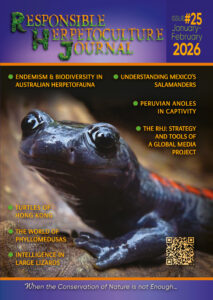
We are creating an online platform that will enable people to share and publish their knowledge, exchange experience with all those interested, cooperate with each other in order to improve and develop their own breeding, research and conservation projects within the framework of RHF. We also plan to publish a monthly RH magazine and an annual almanac based on publications prepared by the RH followers.
2. The RHF is advocating and advancing responsible approach to keeping and breeding reptiles and amphibians in the private and zoo sectors, preserving their experience and achievements and sharing them among all interested parties. We need regular publications on the role of herpetoculture in the conservation of species.
3. Particular attention will be paid to high standards of amphibian and reptile husbandry and implementation of proper ethics. Herpetoculture can be and should become a lifeboat for animals to prevent disappearance of natural populations!
4. From the very beginning, we shall provide every opportunity for our partners to actively participate in the project. Therefore, we plan a system of small grants to support projects aimed at conservation, research, breeding, publishing and education within the framework of RHAP. Over time, we plan to carry out larger projects.
5. We plan to propagate a specific subsection of RH called Preservation Herpetoculture (PH) that shall address ethnoherpetological sphere by preserving human experience of the diversity of amphibians and reptiles through their integration in society and culture by establishing self-sustaining populations through captive breeding. PH shall encourage and support organizations and private breeders who contribute to forming, maintaining and increasing ex situ populations using only responsible and legal approaches to obtaining, moving and keeping animals.
6. Also we plan to share our values and goals by promoting and presenting them at reptile shows in different countries.
7. As regards educational part of RHF we plan to present a series of educational videos made by remarkable persons in herpetoculture and well known experts in certain groups in order to create online School of Herpetoculture.
8. We support cooperation between herpetoculture and herpetology.
Background
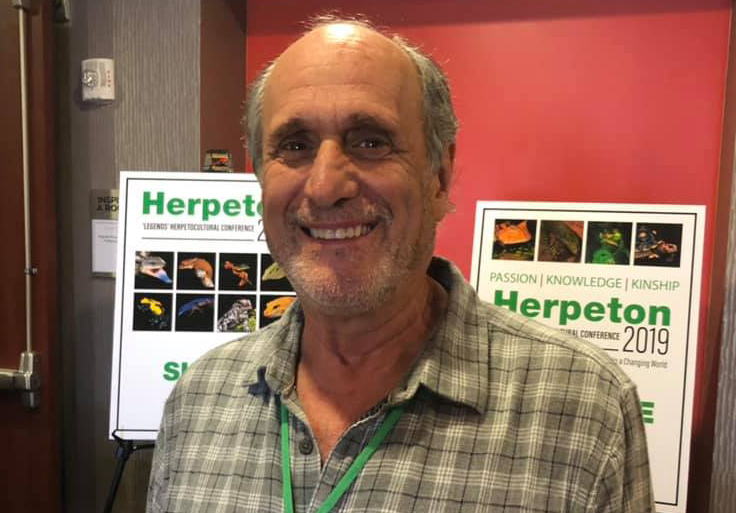
The idea of Responsible Herpetoculture Foundation was presented by Dmitri Tkachev, Founder, BION Terrarium Center, at Herpeton-2019 Herpetocultural Conference (San Diego, CA, USA) and supported by Philippe de Vosjoli, Creator and Promoter of Herpetoculture as philosophy and discipline. The idea of launching such project received a sound response from our colleagues, partners and friends in different countries.
RHF was started in early 2021. At that time BION Terrarium Center had quite enough funds for its implementation and we used them quite effectively, I believe.
Russia’s attack on Ukraine has spoiled our plans. At present, we are forced to use the funds received as donations in order to save unique reptile collection of BION Terrarium Center and to support its team.
Nevertheless, at present we do all we can for implementing direct tasks and goals of the RHP, as you could always see from the very beginning.
We are very grateful to all our partners, friends and like-minded people for their most valuable support, both moral and financial!
For a number of years, we have directed our funds to support projects and events related to the development, promotion and advocacy of herpetoculture in different countries (including Ukraine, The Netherlands, Madagascar and USA).
In this regard, for todaywe consider the RHF as our key activity, in which reputable experts from different countries are already participating; more experts are expected to join. We are genuinely interested in representing active people from the private sector, the reptile industry, zoos and conservation!
After peace comes to Ukraine, we are going to use more globally the funds provided by members and sponsors of the RHP to support specific projects dealing with the study, conservation and breeding of rare species.
All finance-related decisions will be made jointly by the Board of RHF Experts.
I take this opportunity to express our gratitude to Philippe De Vosjoli, Honorary President of the RHF, for his most important role in the preparation of our project. Special thanks to all Experts who take part in our project.
Every year we will provide a public report on our activities.
Please become a Member or Sponsor of RHF and support the global project on preserving the species in nature, breeding a rare species in captivity, advocating herpetoculture in general through every positive publication, event or other action!
On behalf of RHF Team
Dmitri Tkachev,
Founder,
Responsible Herpetoculture Foundation (RHF)
Contacts:
responsibleherpetoculture@gmail.com
responsibleherpetoculrure.foundation
 Shopping cart



 On behalf of our international team, including private breeders and experts from different countries, we launch a Responsible Herpetoculture Foundation (RHF) aimed at involving the private sector (together with zoos, science and conservation) in creating and maintaining ex situ populations of captive-bred reptiles and amphibians to use their unique experience, capabilities and potential, on the one hand, and to raise their authority and status, on the other hand. Unlike zoos, which are usually focused on big charismatic species that are attractive in exhibitions, we deal mainly with small species that can easily be kept within a relatively small space. Still, cooperation with zoos, breeding centers and reptile shows is very welcome; it is considered to be an option in the RHF evolution.